
Your Step-by-Step Guide to Starting a DevOps Career in 2025
If you’re reading this, chances are you’re either switching careers, just out of college, or exploring new paths in tech—and you’ve come across the term DevOps more times than you can count. You might be wondering: What exactly is DevOps? Is it right for me? And more importantly, how do I get started with no experience?
Well, you’re not alone—and the path is not as complicated as it seems.
Let’s break it down together. This isn’t just another generic guide full of buzzwords. Think of this as your personal map, drawn by someone who’s been there.

What Is DevOps and Why Does It Matter?
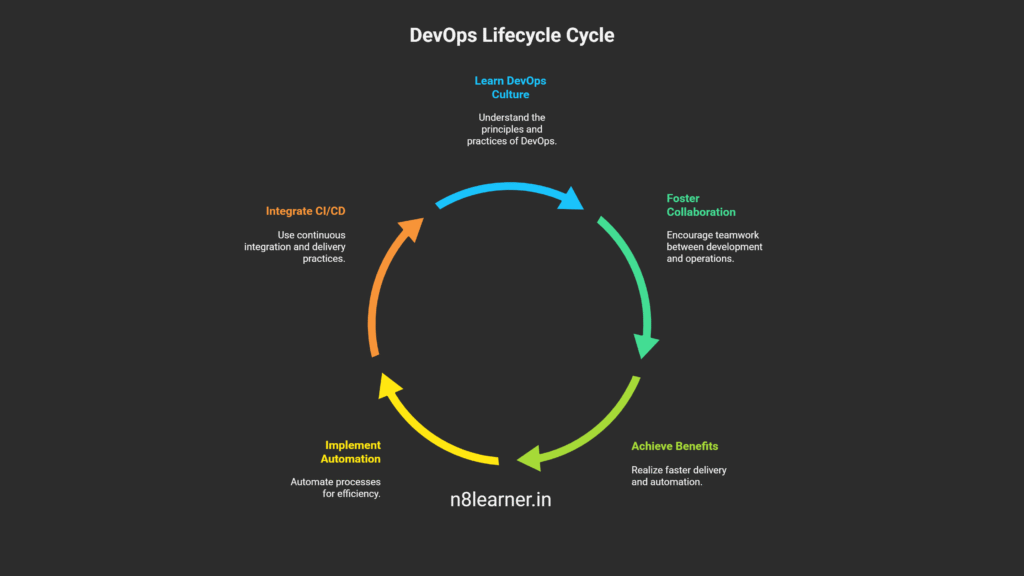
At its core, DevOps is about getting developers and operations teams to work together more efficiently. It’s not a tool or a platform—it’s a way of thinking and building software.
In the real world, this means automating boring tasks, writing scripts to manage servers, using cloud platforms like AWS or Azure, and making sure code gets from a developer’s laptop to production without chaos.
So, if you enjoy problem-solving, like to tinker with systems, and get excited about making things run smoother—DevOps could be your calling.
1. Start with the Foundations: Don’t Skip the Basics
Before you dive into Kubernetes or Terraform, pause. Your first step is to understand the basics—deeply.
📘 Learn Linux
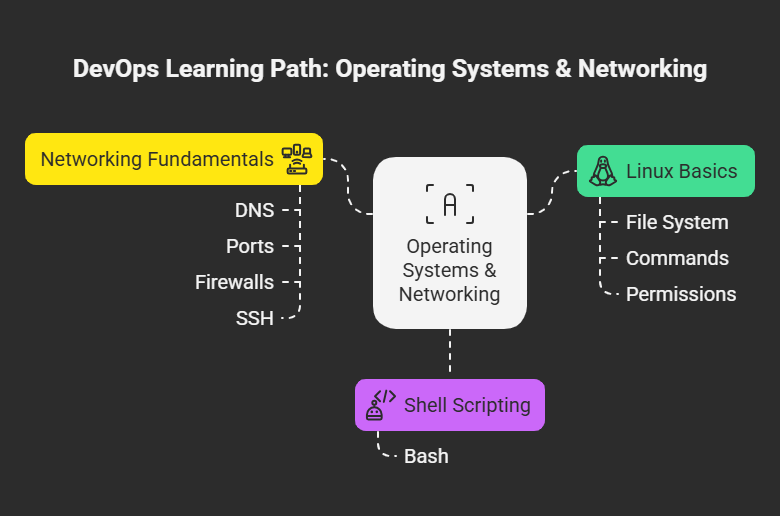
Most of the tools you’ll use in DevOps run on Linux. Get familiar with the command line, understand file structures, permissions, and process management. You don’t need to be a sysadmin, but you do need to feel comfortable navigating a terminal.
🌐 Understand Networking
Learn what a DNS server is. Understand how ports, firewalls, and IP addresses work. This helps you troubleshoot issues when something breaks in the cloud (which it will).
🧠 Version Control with Git
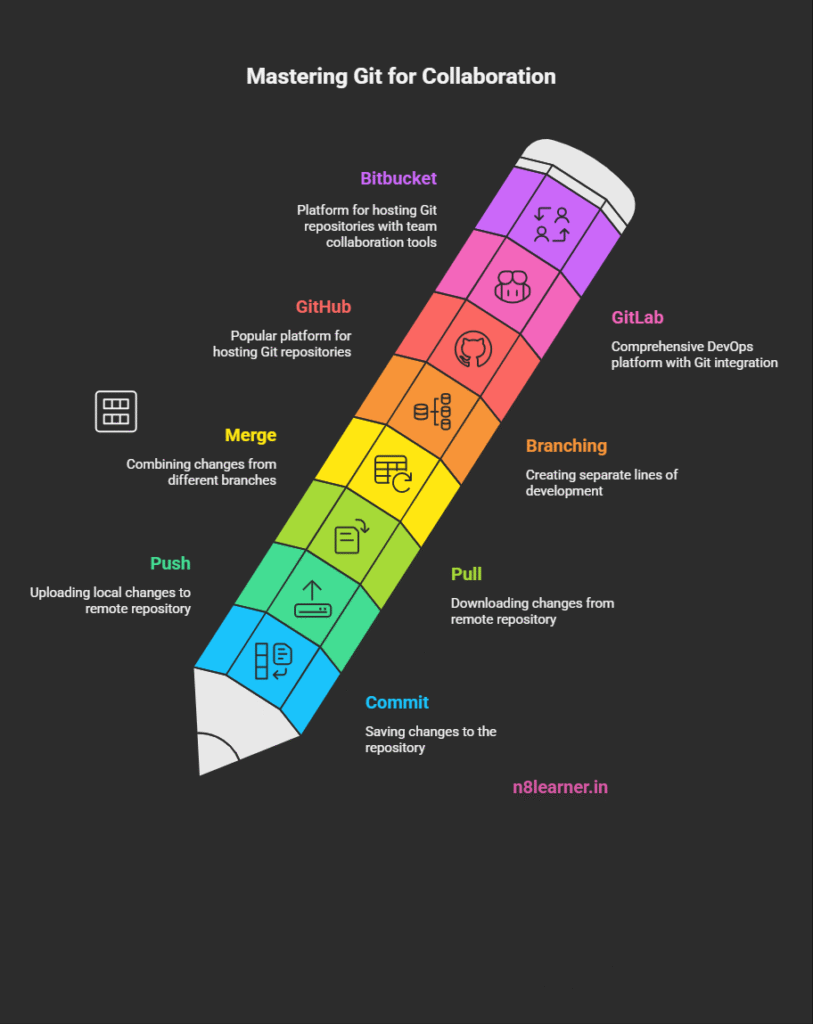
Version control is like saving your work—smartly. Git helps teams manage code and changes. Even solo, it’s an essential habit to build. Learn how to clone repos, create branches, and handle pull requests.
2. Pick a Programming Language (And Stick With It)
You don’t need to be a full-time developer, but you do need to code.
Why?
Because scripting helps you automate tasks, write deployment files, and manage infrastructure.
What to learn?
- Python is beginner-friendly and widely used in DevOps automation.
- Bash is powerful when working with servers and writing quick scripts.
Start simple. Write a script that pings your favorite websites. Then automate a backup folder. Small wins build confidence.
3. Dive Into DevOps Tools (One at a Time)
Here’s where most beginners get overwhelmed. There are hundreds of tools out there. But you don’t need all of them.
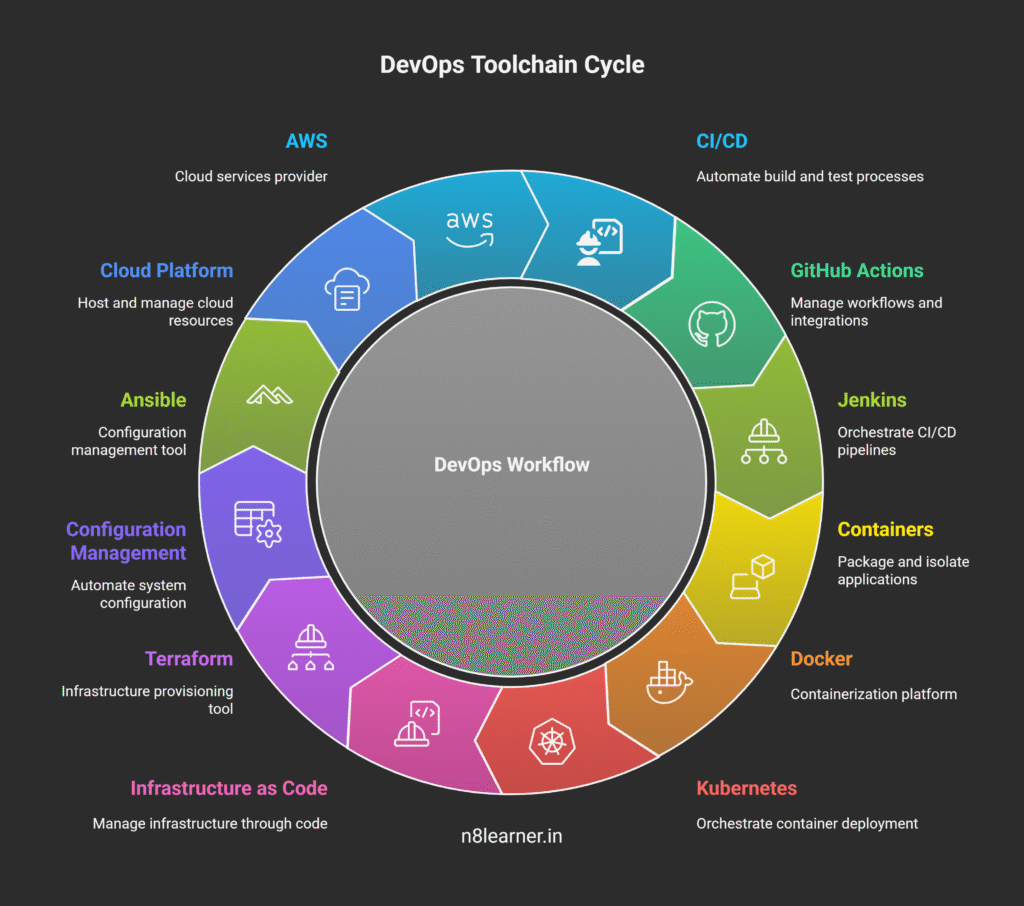
Start with one from each category:
| Category | Tool to Learn |
| CI/CD | GitHub Actions or Jenkins |
| Containers | Docker |
| Orchestration | Kubernetes |
| Infrastructure as Code | Terraform |
| Configuration Management | Ansible |
| Cloud Platform | AWS (start with EC2, S3, IAM) |
Focus on use-cases. Don’t just install Docker—create and run a container. Don’t just learn YAML—use it in a real CI/CD pipeline.
4. Work on Real Projects (Even Small Ones Count)
Reading is great, but doing is better.
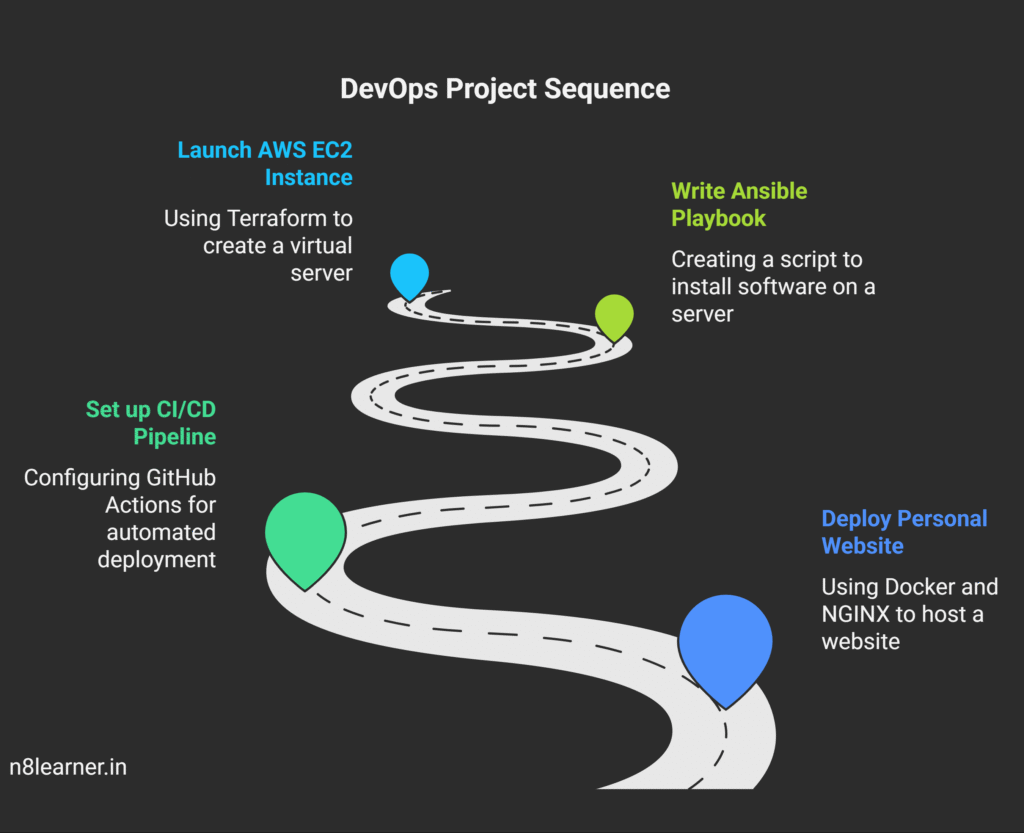
Here are a few project ideas to start with:
- Deploy a personal website using Docker and NGINX
- Set up a CI/CD pipeline with GitHub Actions
- Write an Ansible playbook to install software on a remote server
- Use Terraform to launch a simple AWS EC2 instance
Put all your work on GitHub. Even if it’s not perfect, recruiters love seeing initiative.
5. Understand Cloud Basics
Most modern infrastructure lives in the cloud. Start with AWS because it’s the most in-demand.
Learn:
- EC2 (servers)
- S3 (storage)
- IAM (permissions)
- VPC (networking)
Don’t worry about mastering everything. Just learn enough to deploy, configure, and troubleshoot simple cloud resources.
Consider getting the AWS Cloud Practitioner certificate—it’s beginner-friendly and shows initiative.
6. Build a Resume That Gets Noticed
Now that you’ve got some skills and projects, it’s time to show them off.
A good DevOps resume should include:
- A short summary (what you’re learning, what tools you know)
- Hands-on projects (with GitHub links)
- Tools and skills (Docker, Git, Linux, etc.)
- Certifications (if any)
- A link to your LinkedIn
💡 Bonus Tip: Write short blog posts on Medium or Hashnode explaining your projects. It shows communication skills—a big plus in DevOps roles.
7. Practice DevOps Interviews
DevOps interviews aren’t just about knowing tools—they test how you think and troubleshoot.
Expect questions like:
- “What happens when a Docker container crashes?”
- “How would you set up a CI/CD pipeline?”
- “How do you troubleshoot a failing deployment?”
Practice explaining things clearly. Join mock interviews or record yourself speaking. Confidence comes from repetition.
8. Start Applying (Even If You’re Not 100% Ready)
You don’t need to know everything to apply. No one does.
Look for roles like:
- DevOps Intern
- Junior DevOps Engineer
- Cloud Support Associate
- Site Reliability Engineer (SRE) – Entry-Level
Every application is practice. Every interview teaches you something new. Keep applying, keep learning.
Final Thoughts: Your DevOps Journey Is Unique
Everyone’s path looks different. Some people come from sysadmin backgrounds, others from coding. Some are fresh grads, others are career changers.
The only thing that matters? Keep going.
Even if you stumble, even if you don’t get replies right away—don’t give up. DevOps is less about perfection and more about problem-solving. And if you’re solving problems, you’re already on the right track.
✍️ Quick Recap :
- Learn Linux, Git, and networking
- Pick Python or Bash for scripting
- Focus on popular tools: Docker, Jenkins, Kubernetes, Terraform
- Get hands-on with small projects
- Understand AWS basics
- Build a clean DevOps resume
- Practice common interview scenarios
Apply for junior or intern roles
